Built Around 47 Seconds
Every element is designed to fit inside a real evening, not to compete with it.
Inside The System
Six components, one evening ritual, and no filler between them.
The Masuda Prayer is not a course you work through for six weeks. It is a compact practice library: one central prayer, one advanced sequence, and a small set of tools that make the habit survive past the first three nights. Everything below arrives together, in one digital delivery.
The design principle running through all of it is subtraction. Anything that made the nightly ritual longer, heavier or easier to skip was left out. What remains is the shortest version of the practice that still feels like a real one.
Every element is designed to fit inside a real evening, not to compete with it.
There is no posture to perfect and nothing to memorise before your first practice.
The materials read like instructions from a patient teacher, not a wall of mysticism.
The heart of the system. The full Kinun-no-Inori written out phrase by phrase, with pronunciation guidance, pacing marks and a plain-English explanation of what each line is asking for.
The deeper layer. Seven hand positions drawn from the prosperity stones of the island tradition, each tied to one facet of abundance.
A short structured log covering your first two days. Not a journal you abandon — six prompts, twice a day.
The condensed version for high-stakes moments: before a salary conversation, a client pitch, or a decision you have been circling for weeks.
Context makes ritual stick. This file covers where the island sits, how the prosperity tradition survived four centuries of privacy, and how the prayer eventually travelled.
Nothing ships. The full library appears the moment your order is confirmed, and it stays yours.
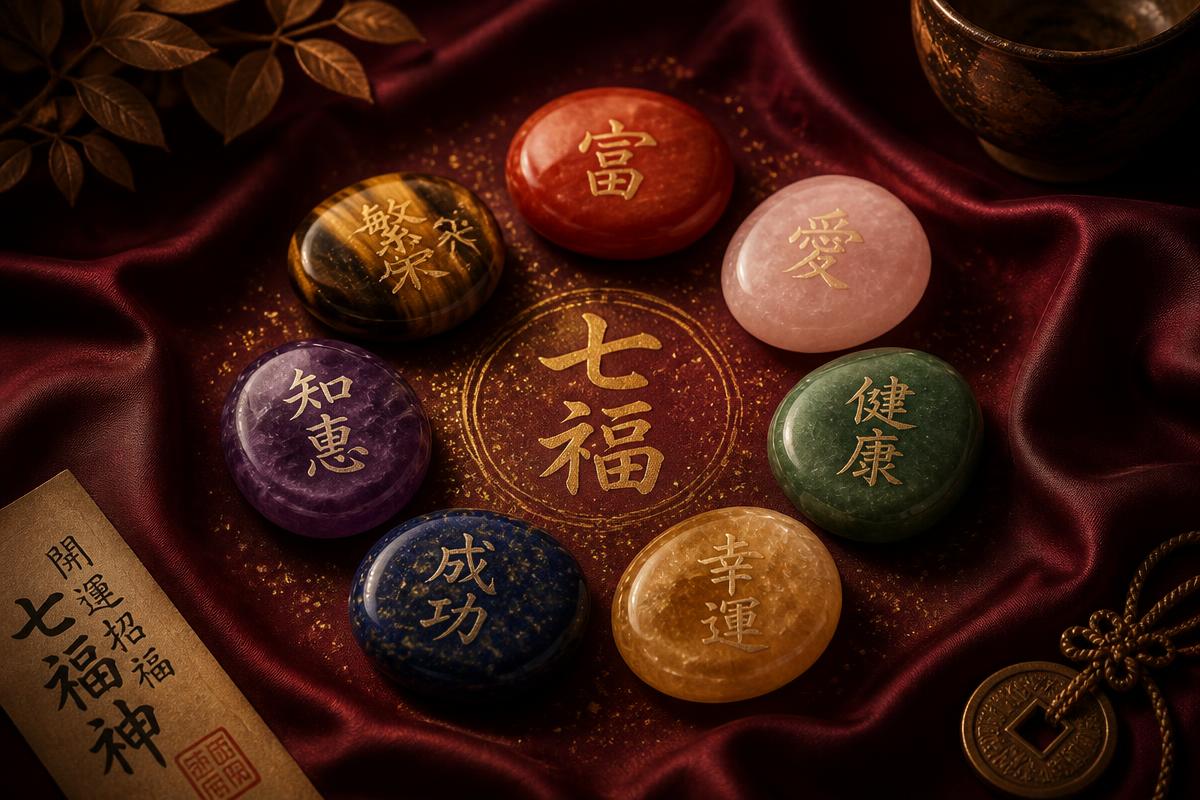
Most people spend their first week on the core prayer alone. That is deliberate. The Seven Sacred Stones sequence works best when the Golden Prayer has already stopped requiring concentration, because then the hand positions become the focus rather than an extra thing to remember.
The first three positions cover the foundations: what you earn, what carries you, and what you know. They are the ones practitioners return to most often.
The remaining four widen the frame. Prosperity in this tradition was never treated as a purely financial idea, and the last position is explicitly about what outlasts you.